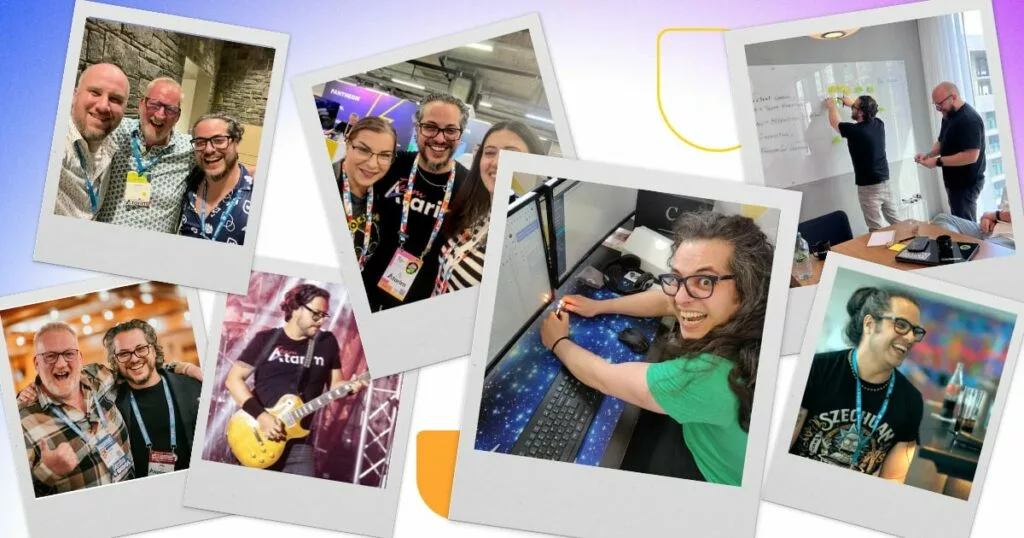



Before I built Atarim, I ran an agency in London. Before that, I was in a band touring Europe, building client websites from the back of a van over stolen McDonald’s WiFi, way before 4G existed.
The van turned into the agency. The agency built hundreds of sites and handled every 2am launch you can imagine.
So I have a fair idea of what your week looks like. Which is why I want to talk about the thing most people get wrong when they first sit down with AI for client work.
They ask it to build something.
That’s the obvious move, and it’s fine. But it’s not where the interesting part is. The interesting part is what happens when the AI knows your clients — your actual book, not a hypothetical — and you start asking it questions a good account manager would ask.
Here are three prompts I’d run first. Each one does something an agency used to need a person for.
1. The brand kit that looks like it came from you
Create a shareable brand kit in the style of this client, and make sure my agency is in the top right so it looks like it came directly from me. Use the project brief as context.
Every agency I know has meant to do this for years. Nobody does it, because it’s a two-hour job that nobody’s paying for, and there’s always something billable sitting in front of it.
But it’s the kind of thing that changes how a client sees you. A tidy, on-brand document turning up with your mark on it says this person is looking after us louder than any status update.
The bit that matters in that prompt is “use the project brief as context.” Without it you get a generic palette. With it, you get something built out of what you already know about this client.
2. The SOPs you keep meaning to write
Suggest the best workflows (SOPs) for MY agency. I want a repeatable plan I can onboard new and existing clients to that will make me look like a rockstar.
I never had a proper onboarding process. I had a process in my head, which I ran slightly differently every time, and then I’d wonder why two projects that looked identical went so differently.
Writing SOPs is one of those jobs that’s obviously worth doing and never urgent, so it sits there for years.
Ask for them out loud and you get a first draft in a minute. It won’t be right. You’ll change half of it, because it doesn’t know your judgement yet — that’s your job. But editing a draft is a completely different task to staring at an empty page on a Sunday night.
3. The honest opinion you’re too polite to give
Look at this client’s logo and tell me honestly whether it’s dated. If it is, show me what I should pitch them instead.
This one’s my favourite, because it does the thing that’s hardest to do yourself.
You’ve been looking at that client’s brand for three years. You’ve stopped seeing it. And even if you did notice, there’s a small awkwardness in raising it — you don’t want to look like you’re inventing work.
But you’re not inventing it. It genuinely is dated. Someone should tell them, and it should be you, and it’s much easier to have that conversation when you’re turning up with a comparison rather than an opinion.
Notice the word “honestly” in there. Without it you’ll get diplomacy. With it you get an answer.
Start with one client. Then add the rest.
If you’ve only got one project in there, start with that one. The prompts still work.
But the reason to add the rest isn’t tidiness. It’s that the interesting stuff only starts when there’s a whole book to look across.
One client, and you’re asking about one client. Ten clients, and you can ask which of them has a site that’s slowed down this year, or which three are due a content refresh, or who hasn’t heard from you in two months. That’s not a question you can ask a folder of files. It’s a question you ask someone who knows the book as well as you do.
That’s the actual shift, and it’s easy to miss because it sounds so small. For most of us the constraint was never taste or skill. It was that there was one of you, and looking across everything properly took a day you didn’t have.
The part that stays yours
I want to be careful here, because this is where a lot of AI talk goes wrong.
None of this is about handing over the craft. The parts of the job you actually love — the taste, the call on whether something’s good, the relationship with the client — those don’t go anywhere. They can’t. They’re the reason anyone hires you rather than a template.
What goes is the layer around it. The scoping, the chasing, the documents you meant to write, the check-in you meant to do. The stuff we used to hire for, when we could afford to, and quietly skipped when we couldn’t.
Inside Atarim that layer runs as a team you direct rather than a tool you operate — Claro handles project management, and there’s a designer, an SEO specialist and a few others alongside him. I built them as characters on purpose, because that’s genuinely what’s happening: you’re not operating software, you’re briefing someone. And nothing ships without your say-so, which is the whole point.
Everything it does is something the best agencies were already doing by hand. Most of us were never able to hire for all of it.
Try one of those three prompts on a real client this week. Not a test project — a real one, where you’ll actually be able to tell whether the answer is any good.
Then tell me what it got wrong. That’s the interesting part. 🤘